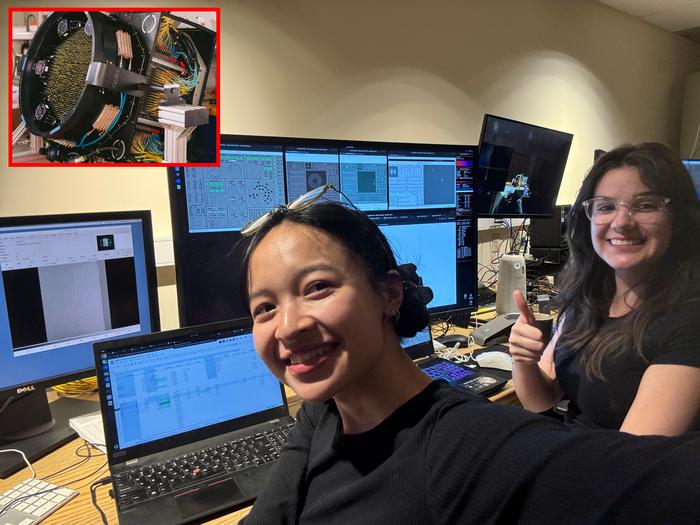
Hillary Andales was sitting at a console inside Las Campanas Observatory, running preliminary numbers on the stars the team had just observed, when she started making noises. Little sounds — the kind a person makes when they're seeing something they don't believe. It was March 21, 2025, the first night of observing for ten University of Chicago undergraduates who had traveled to the Chilean Andes to learn how real astronomy works. They still had a couple of stars left on their list. But Hillary had found something in the data that was about to change everything.
Who's Who?
-
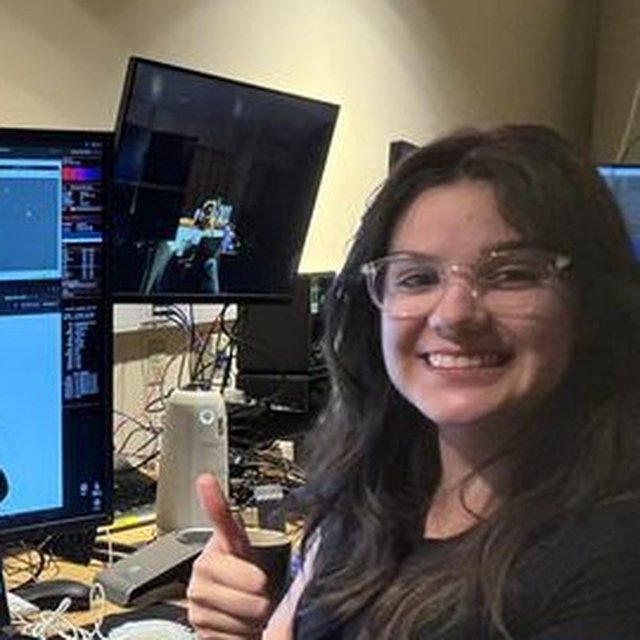 Natalie Orrantia — Led the carbon analysis that came back empty — and rewrote what astronomers thought they knew.
 -
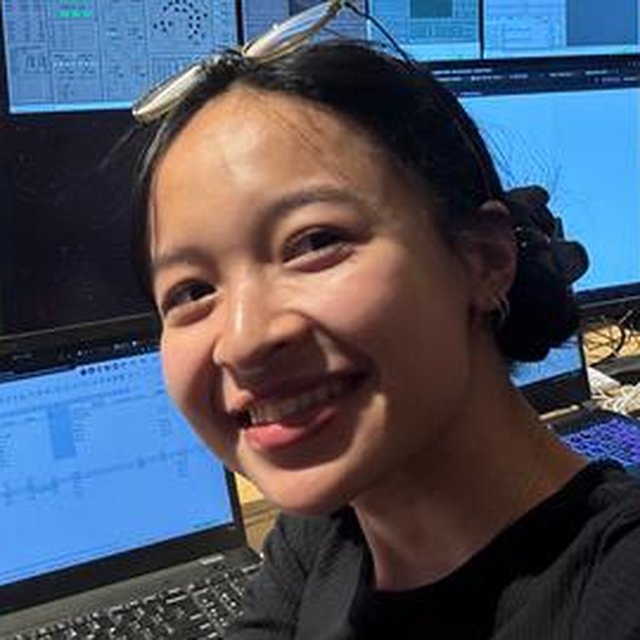 Ha Do — Tested the star for every element they could measure. Everything came back almost zero.
 -
AJAlexander Ji — Scrapped an entire quarter's curriculum the morning after his students found something he didn't expect.
-
HDHillary Diane Andales — Won a global science prize at 17 in the Philippines. Now she's the one who said, 'This is nuts.'
-
JYJoseph Yeung — Held the same astronomy club presidency as Carl Sagan. Now doing a PhD at Princeton.
-
JKJuna Kollmeier — Runs the largest spectroscopic survey in astronomy and called the find 'their inalienable right to physics.'
-
PTPierre Thibodeaux — Co-taught the class that was supposed to be a normal field course. It wasn't.
-
GLGuilherme Limberg — A galactic archaeologist from São Paulo who specializes in reading the chemical fingerprints of ancient stars.
"This is nuts, could it be a mistake?" That's what Natalie Orrantia remembers Hillary saying. Natalie, a fourth-year astrophysics and physics major, had helped narrow several thousand candidate stars from the Sloan Digital Sky Survey down to 77 targets. Now one of those targets — a faint point of light catalogued as SDSS J0715-7334, about 80,000 light-years from Earth — was turning out to be the most chemically pristine star anyone had ever found. Not by a small margin. By a factor of two. The star has less than 0.005% of the Sun's metal content, which makes it a relic from the earliest era of the universe, formed from gas that had been touched by only one or two supernovae of the very first generation of stars.
Ha Do, another fourth-year, analyzed the star across a large swath of elements. "The abundances are quite low for all of them," Ha told the SDSS team. What Natalie's analysis added was even stranger: the carbon content was so low it was undetectable. That matters because astronomers had assumed that carbon and other heavy elements were what allowed the universe to transition from making only massive, short-lived first-generation stars to making smaller, longer-lived ones like our Sun. This star's existence suggests something else drove that transition — cosmic dust.
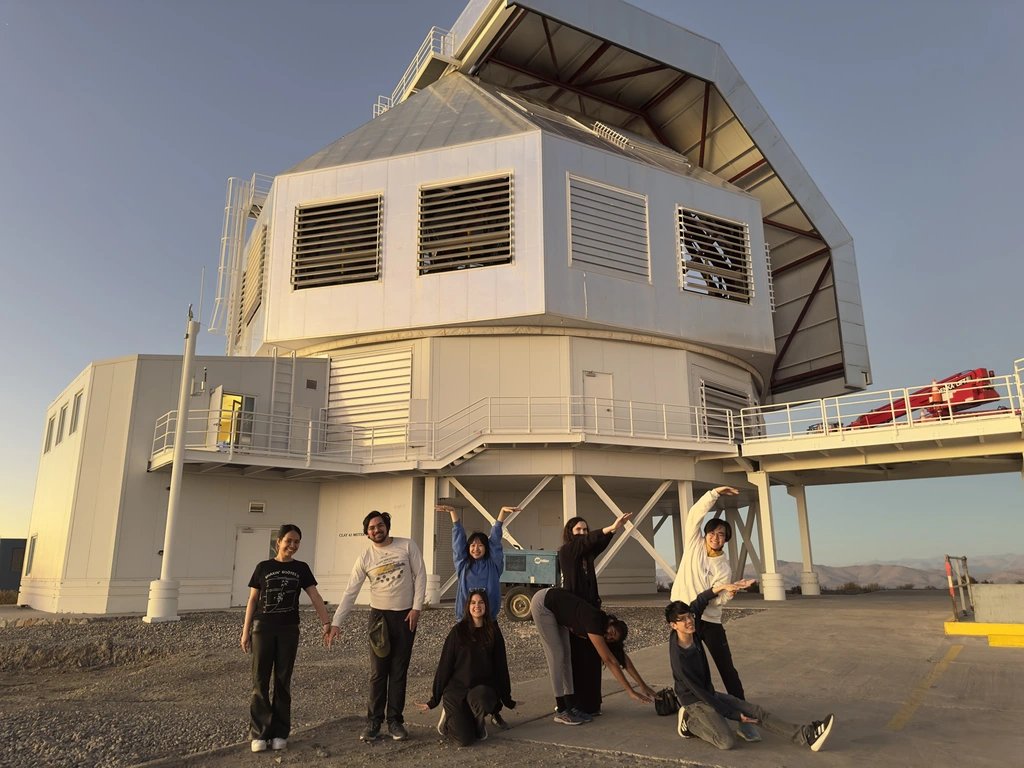
Their professor, Alexander Ji, an assistant professor of astronomy and astrophysics at UChicago and a recent Sloan Research Fellow, had designed the Field Course in Astrophysics to give undergraduates real telescope time on the 6.5-meter Magellan telescopes. He did not expect his students to make a discovery that would end up in Nature Astronomy. "We found it the first night, and it completely changed our plans for the course," Ji told UChicago News. He went home and scrapped the entire curriculum he'd planned for the following quarter. Instead, the class would throw everything into analyzing this single star.
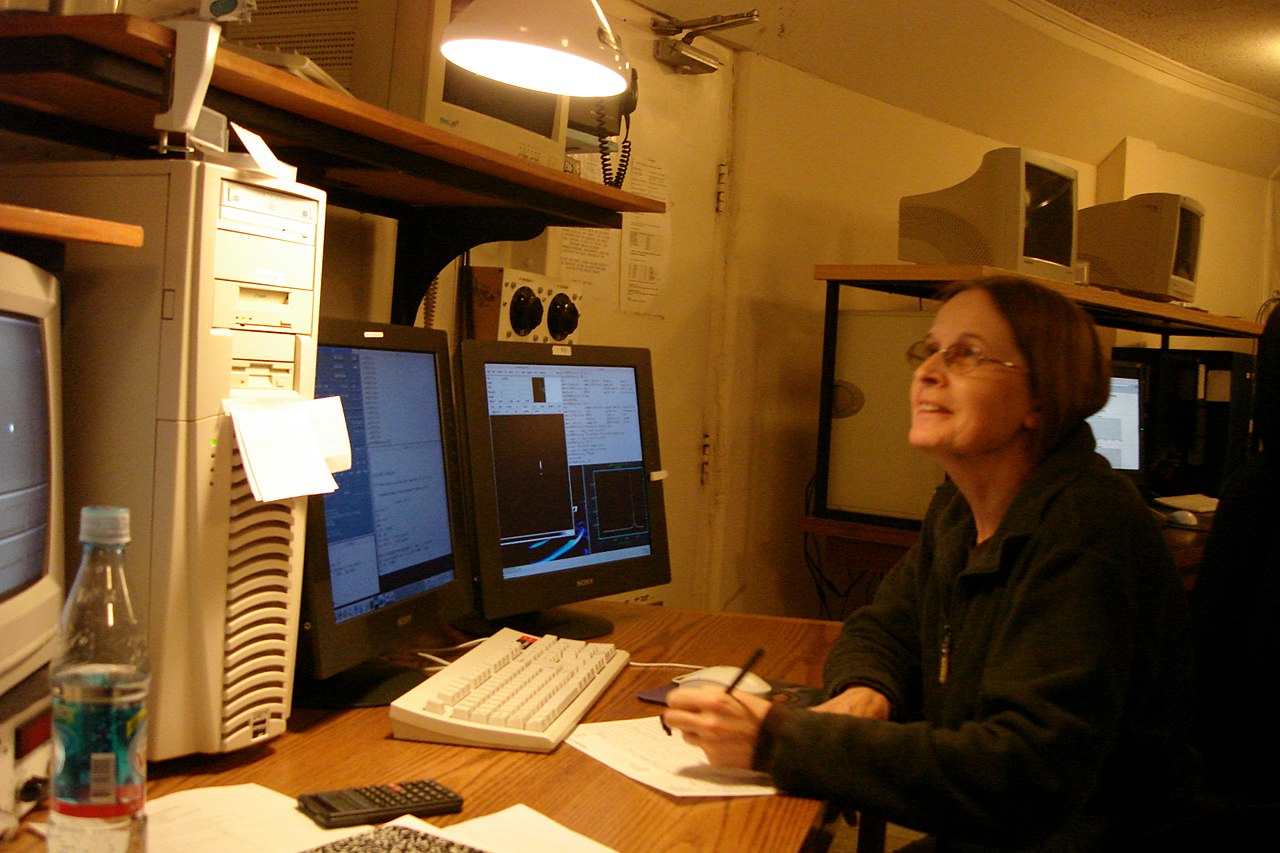
"You could feel the energy in the room," Ha said. "I think Professor Ji was doing mental backflips." Joseph Yeung, then a third-year astrophysics major and president of UChicago's Ryerson Astronomical Society — a post once held by Carl Sagan — put it more simply. "It's crazy to be in the driver's seat, sitting there in the moment and knowing you're one of the first people — maybe the first person ever — to see this light." Yeung has since graduated and is now pursuing a physics PhD at Princeton.
Hillary Andales had already lived several extraordinary lives before landing in Chile. She grew up in Abuyog, Leyte, in the Philippines, won the Breakthrough Junior Challenge at 17 with a video explaining relativity, graduated from MIT in 2023, and picked up UChicago's Wayne C. Booth Prize for Excellence in Teaching in May 2025. Pierre Thibodeaux, another UChicago PhD student, co-taught the field course alongside her. Guilherme Limberg, a postdoctoral researcher from São Paulo now at UChicago's Kavli Institute for Cosmological Physics, joined the study as the specialist in stellar chemical abundances.
Juna Kollmeier, who directs the Sloan Digital Sky Survey that produced the data the students were working with, saw something larger in the moment. "They have discovered their inalienable right to physics," she told UChicago News. "Surveys like SDSS and Gaia make that possible for students of all ages everywhere on Earth." Kollmeier, who also founded the Carnegie Theoretical Astrophysics Center, added something that felt personal: "When I was an undergraduate, I greatly preferred doing research to taking classes. I'm delighted that Alex's course was transformed into a curriculum of discovery."
The star itself formed in the halo of the Large Magellanic Cloud and migrated to the Milky Way billions of years ago. No one has ever directly observed a first-generation star — the massive, metal-free giants that burned hot and died fast in the universe's infancy. SDSS J0715-7334 is the closest thing yet found: a second-generation star, born from the ashes of those earliest explosions, carrying the chemical fingerprint of a universe that was almost brand new.
The paper was published April 3, 2026 in Nature Astronomy. Natalie Orrantia has decided to pursue graduate work in astronomy. "The more you find, the stronger the claims you make about these early stars and how our universe evolved," she told UChicago News. She said it casually, like someone who already knows what she's going to spend her life doing.